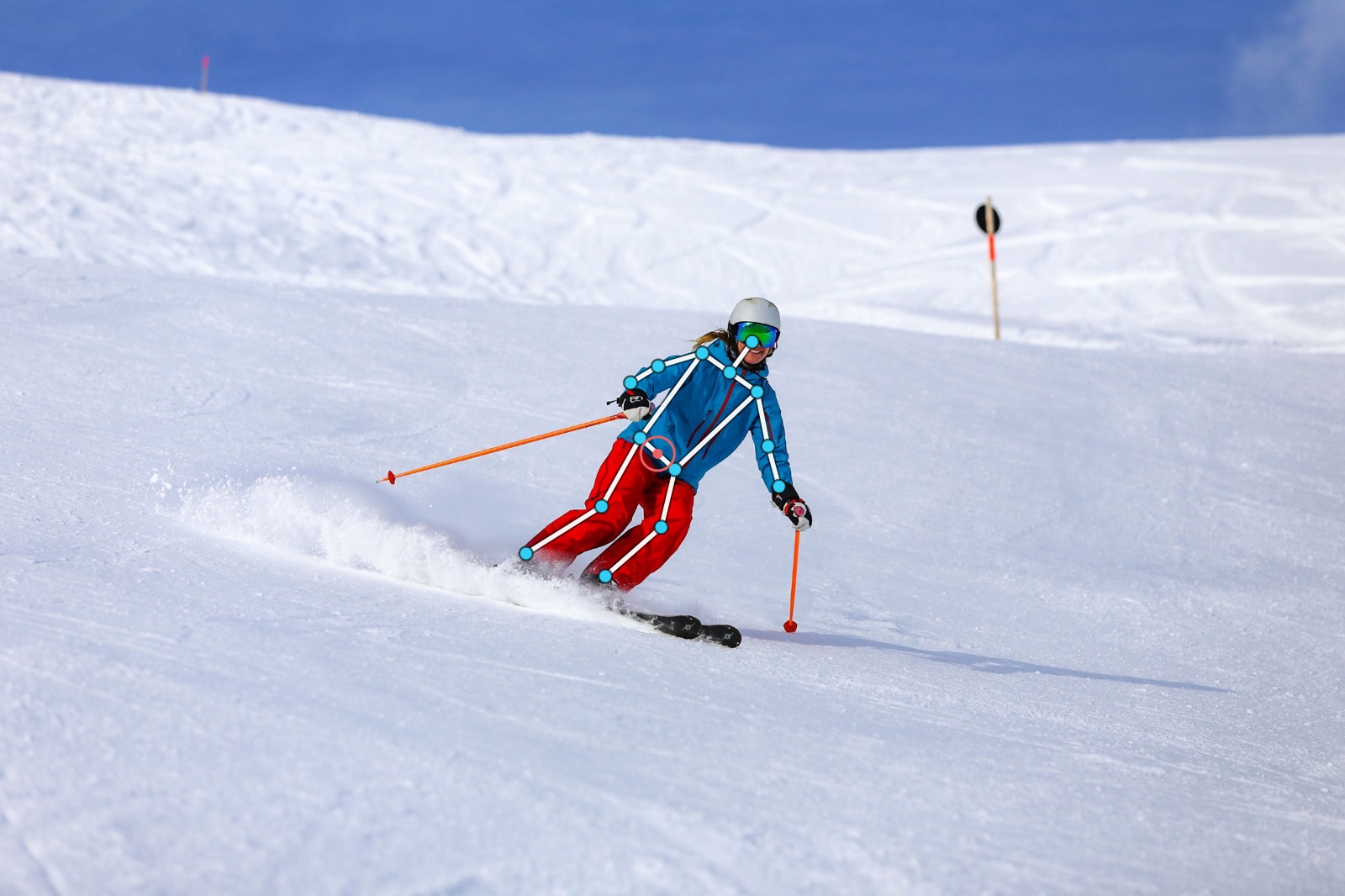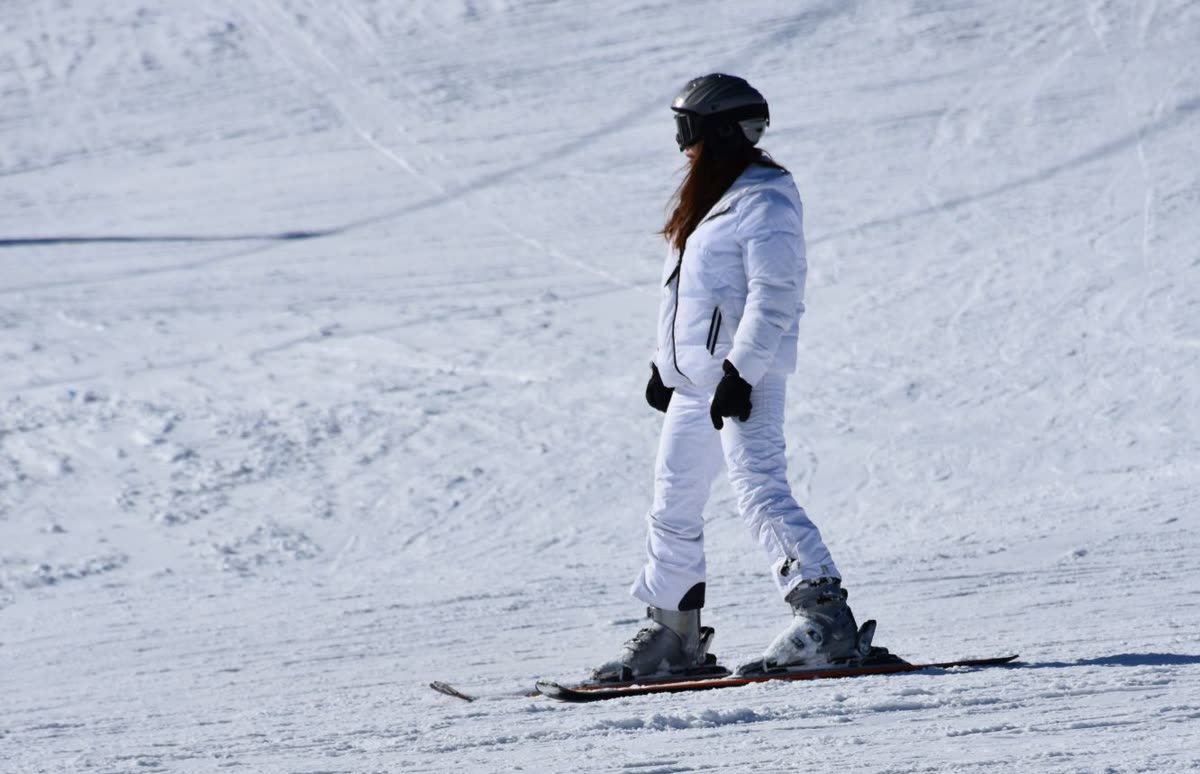
Burning thighs after two runs. Skis that run away from you on steeper pitches. Turns that start late and feel like a fight. If that sounds familiar, there’s a good chance you’re skiing in the “back seat”.
It’s one of the most common habits in skiing and snowboarding, and one of the easiest to see on video. Here’s what it looks like, why it happens and the drills that fix it.
What “leaning back” looks like
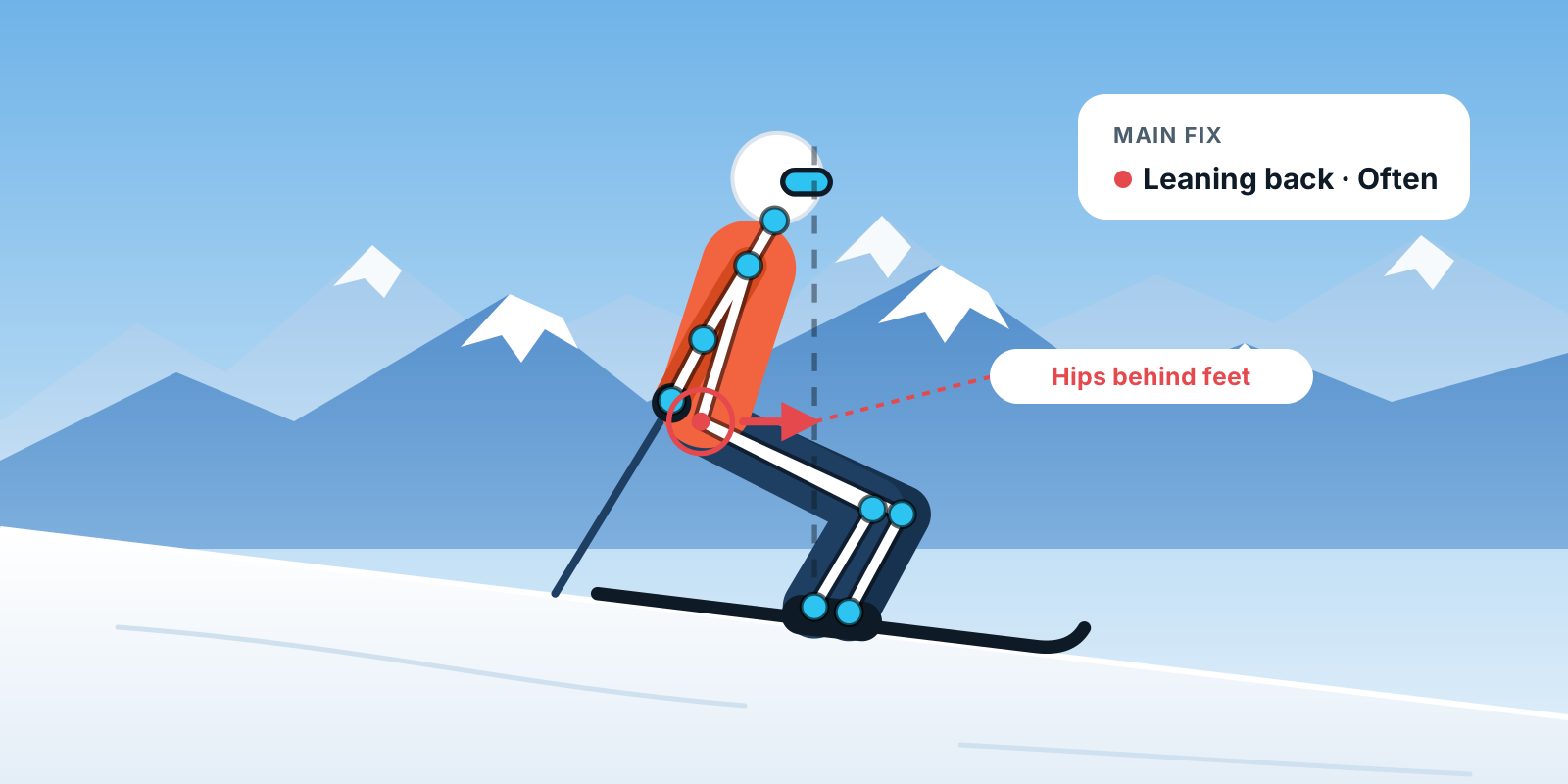
Leaning back means your hips sit behind your feet instead of over them. You’ll usually see it most as a new turn starts, right when you need the front of your skis to grip.
Typical signs:
- Hips behind the boots, as if sitting on a chair that isn’t there
- Shins straight up instead of leaning into the boot tongues
- Hands dropping behind you or down by your hips
- The ski tips go light and the skis decide where the turn goes
On a side-view replay it’s easy to spot: draw a line straight up from your ankle. If your hip is clearly behind that line as the turn begins, you’re in the back seat. In Slopeo this shows up as Rearward Position, with the moment it happens marked on the replay.
Why it happens
Fear and speed. On a steeper slope your body pulls away from the fall line. It feels safer to lean uphill and back, but it does the opposite: the skis speed up and you lose control.
Standing too tall, or sitting too low. Locked knees and stiff ankles push your hips back. So does squatting with bent knees but straight shins.
Hands behind you. When your hands drop back, your shoulders and hips follow.
On a snowboard, it’s the same habit in a different shape: your weight drifts onto the back foot and your hips move behind the board. Turns stall and the nose washes out.
Why it matters
- Less grip at the start of the turn. The front of the ski or board does most of the steering. With your weight behind, it can’t bite.
- Harder to start the next turn. You end up twisting or skidding the skis around instead of rolling onto the new edge.
- Tired legs. Holding yourself up from the back seat works your thighs hard. It’s the main reason your quads burn after a few runs.
The fix: Garlands (ski)
Garlands teach your hips to move forward exactly when a turn begins.
- Find a gentle, wide slope and traverse across it.
- Start a turn toward the fall line, then return to the traverse before you finish it.
- Repeat all the way across the slope, like a garland of half-turns.
- Each time a turn begins, move your hips forward over your feet and feel your shins press the boot tongues.
Do 3 runs. Keep the speed low; this is about timing, not speed.
Snowboard: Falling Leaf
- Stand on your heel edge, facing downhill.
- Drift sideways one way by pressing your front foot, then the other way by pressing your back foot, without turning.
- Finish each drift with your weight centred over the board.
Do 3 runs. If the nose won’t lead when you press the front foot, your weight is still on the back foot.
Bonus: Hands-Forward Turns
On easy terrain, link slow turns with both hands held forward where you can see them, like carrying a tray. If a hand drops behind you, slow down and reset. Keeping your hands forward keeps your weight over your feet. Do 3 easy runs.
Check your progress
- Before: film a few turns from the side on a slope you know.
- Practise the drill for a few runs.
- After: film again on the same slope, from the same spot.
Compare the two replays. You’re looking for the hip moving over the ankle line as each turn starts. In Slopeo, the Rearward Position finding should show up less often, or disappear from your results.
Feel for it: light, even pressure under your whole foot, and your shins touching the front of the boots.
If it keeps coming back on steeper slopes, step down to easier terrain until it holds, then build back up. And if you can, book a lesson: an instructor can help you find the feel faster, and your replays will show you whether it stuck.