Most skiers and snowboarders take a lesson or two a season. The rest of the time, maybe 90% of the days on snow, nobody is watching them ride. That’s where habits stick, and where an AI ski coach changes things.
We make Slopeo, so we’re biased. Here’s how an AI coach works, where it beats a lesson, where an instructor still shines, and how to get the most out of both.
What an AI ski coach actually does
In Slopeo’s case it’s three steps, all on your iPhone:
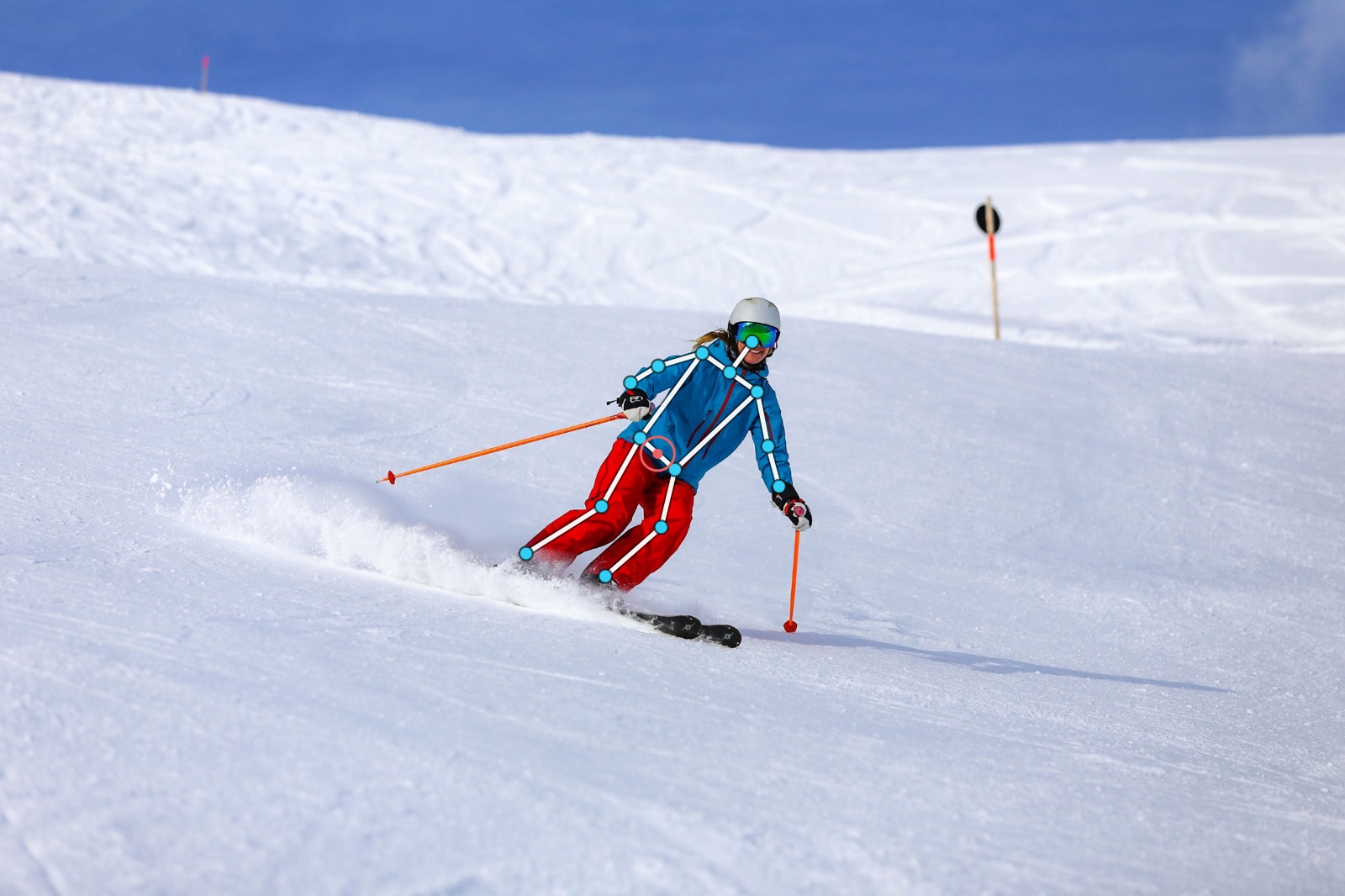
- Body tracking. Slopeo finds 19 points on your body, like knees, hips, shoulders and ankles, in every frame of your video.
- Measurement. From those points Slopeo measures knee flex, torso lean, hip position, upper body rotation and how well your left and right turns match.
- Coaching. The measurements are compared with what’s typical for your sport and level. You get a score, the one issue that matters most, the moment it happens in slow motion, and a drill to fix it.
Why an AI coach helps you improve faster
It’s there every run, not one morning a season. Improvement comes from practice with feedback. A lesson gives you feedback for two hours. An app gives it to you on the third day of your trip, on a quiet weekday, and on the days you ski alone.
It sees every turn. An instructor watching from the side of the piste sees a few turns at full speed. A replay lets you slow down, step frame by frame and compare turn 7 with turn 2.
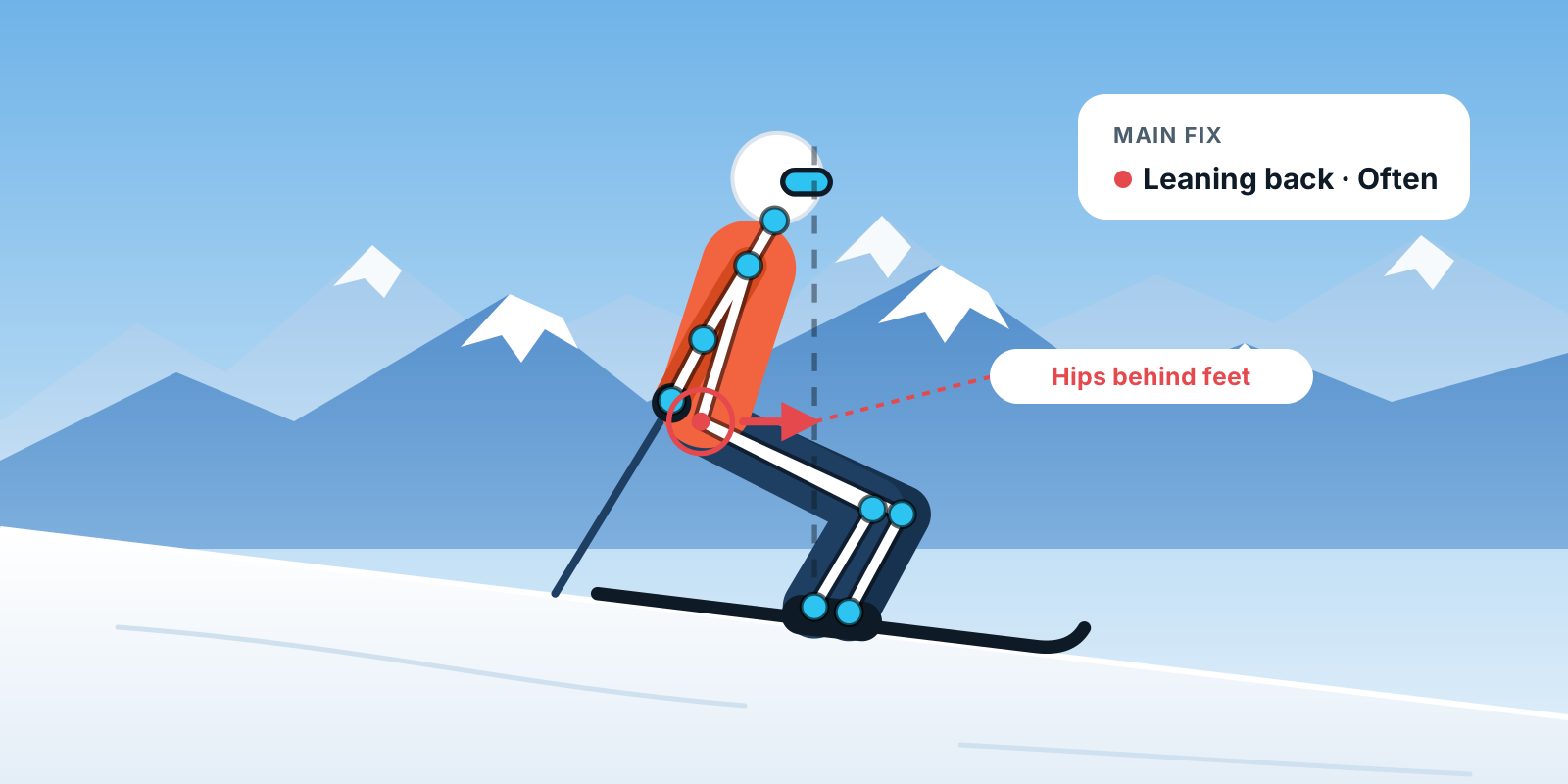
It shows you what you can’t feel. Almost every rider is sure they’re leaning forward until they see the replay. Watching your own skeleton sit back convinces you faster than any explanation.
It measures the same way every time. That makes progress visible. When your left/right match goes from 60% to 85% over a week, you know the drill is working, and you know when it’s time to move on.
It keeps it simple. One main fix and one drill per run. No wall of numbers, just the next thing to work on.
It costs a fraction of a lesson. A single private lesson often costs more than a full year of an app.
Where an instructor still shines
A phone is not a person on the slope with you, and it’s worth knowing the difference:
- Feel. Video shows where your body is. An instructor can also read edge grip and pressure from how your skis behave.
- Every angle at once. Video is 2D, so some checks need a side view and others a view from behind. Slopeo tells you which angle to film next; an instructor just walks around you.
- Terrain and safety. An instructor picks the right slope for the exercise and adjusts the plan when you’re tired or nervous.
Side by side
| AI coach (Slopeo) | Ski or snowboard instructor | |
|---|---|---|
| Available on every run | Yes | Only during the lesson |
| Every turn in slow motion | Yes | No |
| Same measurement every time | Yes | No |
| Tracks your progress over weeks | Yes | Rarely |
| A drill for your main issue | Yes, after every run | Yes |
| Feels edge grip and pressure | No | Yes |
| Judges from any angle | Tells you which angle to film | Yes |
| Cost | A fraction of one lesson | Per hour |
The fastest way to improve: use both
- Every ski day, film a couple of runs and check your main fix. Practise the drill on the next lift ride.
- Before a lesson, show your instructor the replay and your main issue. You’ll skip the first 20 minutes of diagnosis.
- After a lesson, film again on the same slope, from the same angle, and watch the measurement move.
- Between trips, your history shows what improved and what slipped, so you start the next trip in the right place.
A lesson shows you the way. An AI coach keeps you on it every run after.
The bottom line
An instructor is great for a few hours. An AI ski coach is with you for the rest of the season: every run replayed, every turn measured, and one clear thing to work on next. For most riders, that’s what turns ski days into real progress.
Film your next run and let Slopeo show you what your turns are really doing.